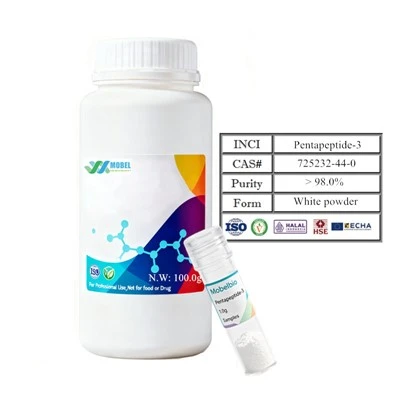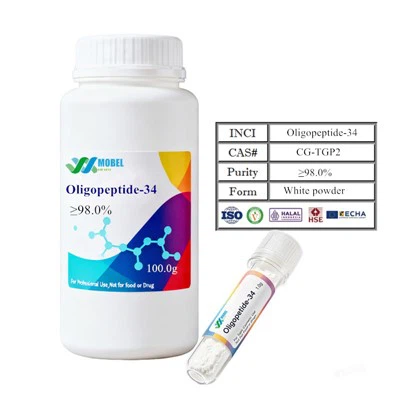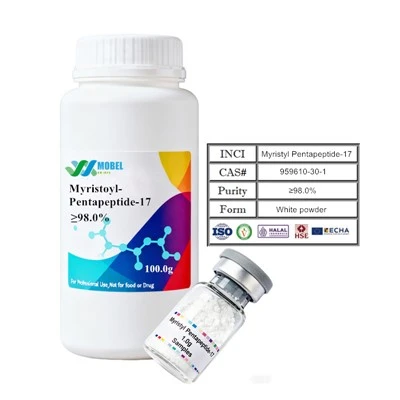
In functional skincare ingredient systems, peptides are typically stored and applied in solution form. Their structural state not only determines biological activity but also directly impacts formulation stability and final product performance. As the premium skincare market continues to demand higher consistency and more precise efficacy, the structural characteristics of peptide solutions have become a critical evaluation factor in procurement decisions.
At the molecular level, peptide solution structures are defined by several key features:
First, they are characterized by short-chain amino acid composition. Peptides consist of 2 to 50 amino acids linked by peptide bonds, forming typical low-molecular-weight bioactive structures. This short-chain nature provides high mobility and reactivity while also making peptides more susceptible to environmental influences.
Second, their spatial conformation plays a decisive role in bioactivity. In solution, peptides do not exist in a fixed structure but rather in dynamic conformational states. These folding behaviors directly affect their ability to bind to cellular receptors, thereby influencing biological efficacy.
Third, peptide solutions are primarily hydrophilic in nature, but contain localized hydrophobic domains. While most peptide systems exist in aqueous environments, certain amino acid side chains exhibit hydrophobic properties, which influence solubility behavior and interfacial stability within formulations.
In addition, peptide solutions are highly sensitive to environmental conditions. Factors such as temperature, pH, and ionic strength can significantly alter their spatial conformation and aggregation state, ultimately affecting stability and active retention.
From a procurement and application perspective, peptide solutions with well-designed structures, stable conformational behavior, and strong batch-to-batch consistency are better suited for stable formulation development. In high-end anti-aging and skin repair products, structural stability has already become a key selection criterion.