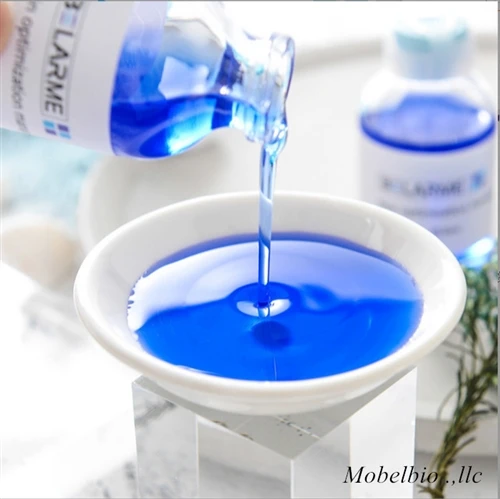
In the functional skincare ingredient system, bioactive peptides are commonly supplied in solution or pre-dispersed forms for formulation use. The physicochemical properties of peptide solutions not only determine their stability and performance but also significantly influence their compatibility across different formulation systems. For procurement professionals, understanding these fundamental characteristics is essential for evaluating supplier quality and potential application risks.
From an industry application perspective, peptide solutions typically exhibit several core features
First, they demonstrate high dispersibility with strong activity at low concentrations. Due to their inherent bioactivity, peptides are generally effective at relatively low usage levels in solution form. This provides formulation efficiency advantages but also requires precise concentration control during production and application.
Second, their stability is highly dependent on environmental conditions. Peptide solutions are sensitive to pH, temperature, and ionic strength. Under improper storage or formulation conditions, degradation or activity loss may occur. As a result, stabilization systems and packaging design play a critical role in maintaining product quality.
Third, they are vulnerable to degradation and oxidation, requiring robust protection strategies. Certain peptide structures may be affected by enzymatic breakdown or oxidative stress during long-term storage. To address this, protective systems such as antioxidants or chelating agents are often incorporated to enhance overall stability.
In addition, peptide solutions offer strong formulation compatibility potential. When properly designed, they can be integrated into aqueous systems, emulsions, and multi-active formulations without negatively impacting appearance or rheological properties.
From a procurement standpoint, high-quality peptide solution suppliers are expected to implement strict quality control systems, including batch-to-batch consistency management, pH control, active content retention verification, and standardized storage and transport conditions. These factors collectively determine product reliability in real-world applications.